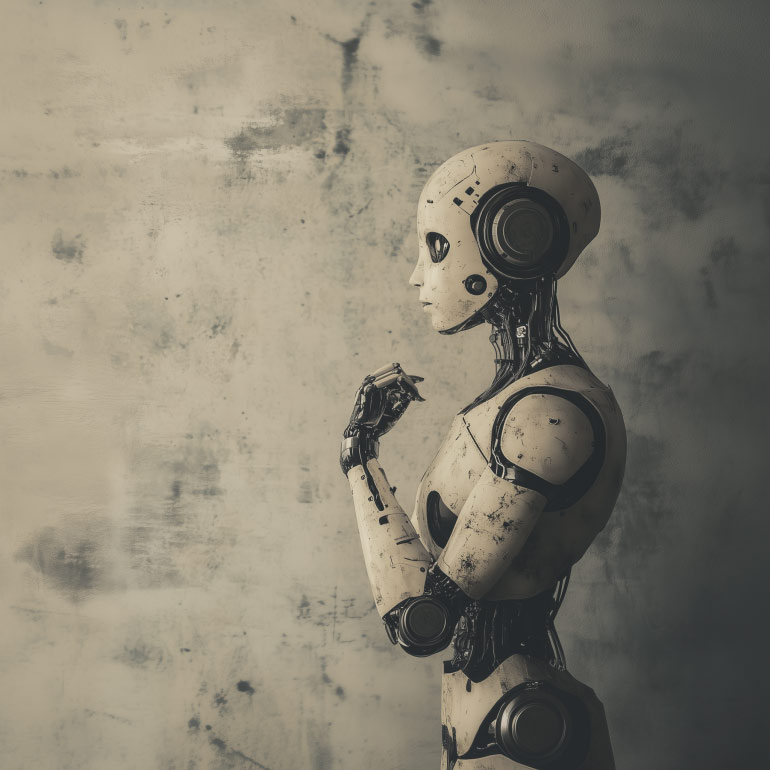
Every major leap in human progress has followed the same pattern. We invent a tool, panic slightly, then work out how to use it without burning everything down. Fire, the wheel, electricity, the internet – all met resistance, all rewired how we live and work. Artificial intelligence is simply the latest upgrade, albeit one that talks back and occasionally hallucinates with great confidence.
The next decade, from 2026 to 2036, isn’t about humans being replaced by machines. It’s about re‑tooling how we think, learn, work, and govern so we stay firmly in the driving seat. AI is not a bolt‑on productivity hack. It’s a reordering force, on a par with electrification, with the potential to add trillions to the global economy. The question is whether we shape that future deliberately or let it happen to us.
The Great Economic Gear Change
AI is pushing the global economy from labour‑heavy productivity towards capital‑heavy automation. Autonomous systems will increasingly generate value, while human input shifts up the chain.
Yes, jobs will disappear. Roughly 75 million globally. But around 133 million new roles will emerge alongside them, leaving a net gain overall. The problem isn’t the numbers. It’s the timing, distribution, and readiness of the workforce.
There’s a more awkward issue lurking beneath the surface. Our tax systems were built for human labour. Payroll taxes pay for public services. AI doesn’t have a National Insurance number.
As automation expands, governments will need to rethink how revenue is raised. Expect more focus on consumption taxes, AI‑driven productivity levies, and eventually the taxation of autonomous systems themselves. This isn’t about punishing innovation. It’s about keeping public finances functional while we retrain millions of people.
At the same time, we’re seeing the rise of AI sovereignty. Nations want their own compute power, their own models, and control over sensitive data. The UK’s push towards sovereign AI isn’t isolationism. It’s economic self‑defence.
From Specialists to AI Generalists
For years, expertise meant going deeper and deeper into a narrow lane. AI is quietly flipping that logic.
When machines can code, reconcile accounts, analyse contracts, and generate content at speed, hyper‑specialisation loses its shine. The emerging premium is on AI Generalists. People who understand enough across disciplines to set direction, ask good questions, and supervise intelligent systems.
The smartest organisations aren’t chasing AI for quick efficiency wins. They’re treating it as an amplifier of human judgement. The winners are focusing on high‑value workflows – product design, demand forecasting, personalisation – and backing those bets with serious change management.
A simple rule applies: if your AI strategy fits neatly into a slide deck, it’s probably not ambitious enough.
Education That Prepares Humans, Not Just Workers
If we keep teaching people to memorise answers that machines can generate instantly, we’re doing them a disservice.
Modern education is shifting towards AI literacy. Not coding for the sake of it, but understanding how AI behaves, where it fails, and how to challenge it. Critical thinking is no longer optional. It’s survival equipment.
At higher levels, learning models are moving towards practical, entrepreneurial, and reflective thinking. Students must learn to apply AI to real problems, spot opportunity in disruption, and pause long enough to ask whether the machine’s answer actually makes sense.
This reflective layer matters. AI is very good at providing the path of least resistance. Humans need the confidence to say, “That’s quick, but is it right?”
The Real Risk: Lazy Thinking
The biggest danger of AI isn’t mass unemployment. It’s cognitive atrophy.
When systems do the thinking for us, our ability to reason, question, and decide can quietly erode. Surveys already suggest people fear losing agency and depth of thought. They’re right to be cautious.
The solution isn’t banning tools. It’s developing metacognitive discipline. Humans must become the meta‑thinkers in the loop. Clear goal setting, structured prompting, active monitoring, and continuous calibration of outputs.
In short, AI should extend our thinking, not replace it. If you find yourself accepting answers because they sound confident, you’re outsourcing judgement you can’t afford to lose.
New Safety Nets for a New Economy
As AI captures more value, societies will need new ways to share the upside.
Ideas like Universal Basic Capital and sovereign AI funds are gaining traction. Rather than simple income redistribution, these models give citizens a stake in productive assets. Think dividends from national AI success, not handouts.
In the UK, proposals such as AI bonds aim to open investment access to people who’ve never owned equities. It’s a pragmatic idea. If automation is generating wealth, broad ownership keeps social contracts intact.
Trust, Governance, and Not Losing the Plot
AI operates globally. Regulation doesn’t.
This mismatch creates friction, uncertainty, and risk. International cooperation is essential, not to slow innovation, but to make it trustworthy. Shared standards, transparency, and accountability are the plumbing of a functioning AI economy.
Without them, businesses hesitate, citizens lose trust, and innovation stalls under its own weight.
What the Next Ten Years Actually Require
Re‑tooling humanity isn’t about becoming more like machines. It’s about doubling down on what machines don’t have.
Curiosity. Empathy. Moral judgement. Context. Purpose.
The organisations, cities, and countries that thrive will be the ones that invest in human readiness alongside technical capability. Not chasing every new tool, but building resilience, adaptability, and thoughtful leadership.
AI will shape the future whether we like it or not. The real choice is whether we meet it deliberately, or let it quietly decide things for us.