If you’ve ever posted a bit of AI-generated content online, maybe a clever video ad, a surreal image, or a scroll-stopping meme—chances are you’ve met them.
The slop squad. And honestly, nothing grinds my gears more. It’s not just irritating, it’s the kind of lazy cynicism that makes my jaw clench. Not because I can’t take a comment, but because it’s dismissive of real effort, clever thinking, and the whole point of creative innovation.
They come armed with a single dismissive phrase:
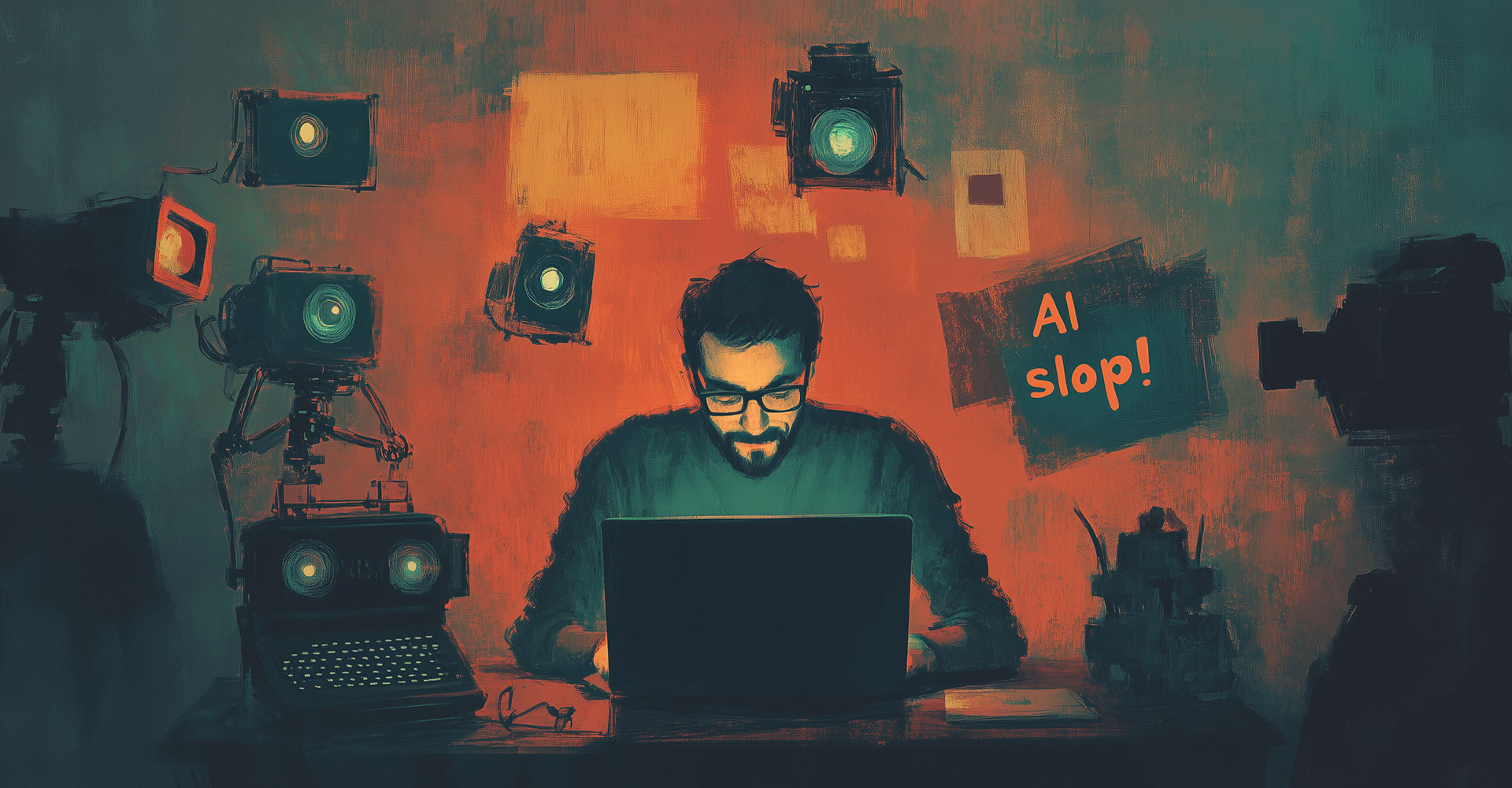
“AI slop.”
It doesn’t matter how thoughtful, clever, or useful your content is. If it looks like AI touched it, it gets thrown into the same digital skip as shrimp-Jesus and gibberish memes. No nuance. No appreciation. Just a knee-jerk reaction from people who seem to think any creative use of AI is a threat to civilisation.
Well… I call nonsense.
When AI Isn’t Slop, It’s Smart
Let’s be clear: slop exists. There’s no defending the firehose of fake sympathy bait and bizarre crustacean deities clogging up feeds. But AI content is not slop by default.
In fact, for many of us, AI tools have opened creative doors we never thought we’d walk through.
You want to make a video ad? Ten years ago, that meant actors, cameras, lighting, post-production, and a client willing to fork out thousands. Now? You can do it from your laptop in an afternoon, powered by the right prompts and a bit of imagination.
That’s not laziness. That’s creative evolution.
People once said tools like photography, printing presses, and digital music would ruin ‘real’ creativity. Sound familiar? Every leap forward disrupted something—and someone. But that’s how progress works.
There’s no point clutching pearls over jobs evolving when they always have. You can embrace the change now, or get dragged into it later.
Meet the “Fun Police”
The irony? Some of the loudest critics of AI content are the ones happily scrolling TikTok for hours or reposting memes made by… you guessed it… algorithms.
The “AI slop” label has become a sort of cultural reflex. For some, it’s rooted in fear, fear of being left behind, of not understanding the tools, or of losing relevance in a fast-changing landscape. Instead of engaging, they dismiss. It’s easier to scoff than to explore. It’s used to shut down discussion, dismiss emerging creators, and sneer at anyone who’s using new tools to make new things. It’s gatekeeping, disguised as good taste.
And it’s killing curiosity.
The Democratisation of Creativity
Here’s the truth the critics miss: AI is the most democratising creative tool since the camera phone.
-
Can’t afford actors? No problem.
-
Not a trained illustrator? Doesn’t matter.
-
Got an idea at 2am? AI will turn it into something tangible before breakfast.
It’s not about replacing creativity. It’s about amplifying it.
The people who shout “slop!” often assume bad intent. But most of us aren’t churning out content to game an algorithm. We’re storytellers, marketers, educators, artists, doing what we’ve always done, just with better tools and fewer gatekeepers.
Let’s Not Pretend The Internet Was Pure Before This
Was the internet ever a gallery of perfect taste?
Of course not. We’ve always had spam, scams, clickbait, and cat memes with terrible grammar. AI hasn’t broken the internet. It’s just changed who gets to make stuff.
And yes, some of that stuff will be rubbish. But guess what? Some of it will be brilliant. Moving. Funny. Insightful. And none of that brilliance would exist if we’d let the slop label scare us into silence.
So, What Do We Do?
-
Use AI boldly. Stop apologising for using great tools. No one shames photographers for not painting portraits.
-
Curate your feed. If you’re seeing junk, that’s on the algorithm. Block, filter, refine.
-
Educate the critics. Gently explain the difference between a click-farm scam and your creative vision.
-
Keep having fun. That’s half the point.
Final Thought
If you’re making something real—something with thought, joy, humour, or strategy—and someone calls it “slop,” smile politely… then go viral anyway.
You’re not part of the problem.
You’re part of what’s next.
And if you’re the one who comments ‘AI slop’ on everything… maybe the problem isn’t the tool, it’s your lack of imagination. Or hey, maybe just ask yourself: what are you actually defending?