16 PSYCHE ASTEROID MINING CONVERGENCE
The convergence of AI, space logistics, and autonomous systems enabling the mining and utilization of asteroid 16 Psyche's metal resources.
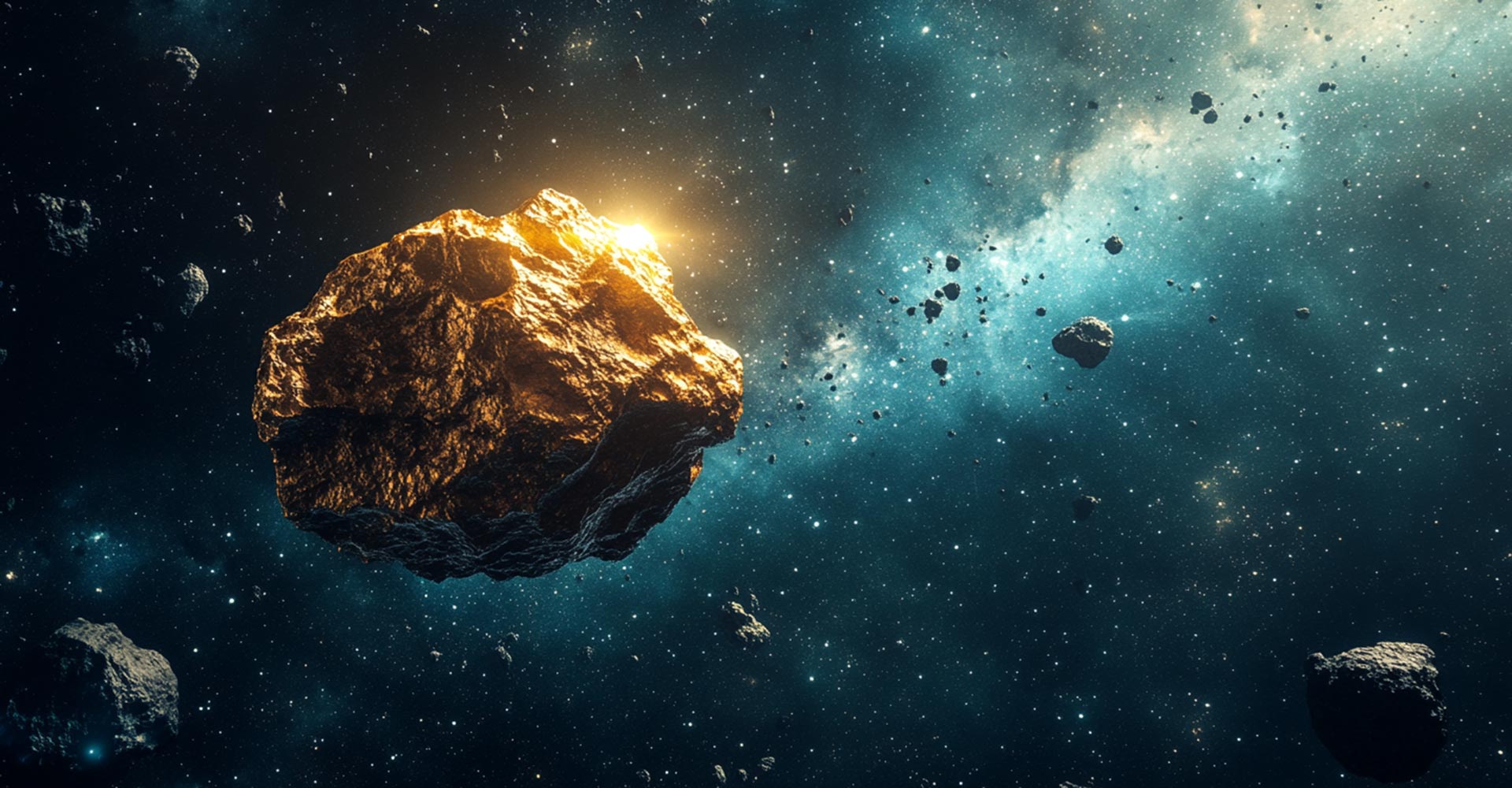
- 16 Psyche is a metal-rich asteroid, likely an exposed planetary core, containing vast quantities of iron, nickel, gold, and platinum.
- Key enabling technologies include autonomous AI systems, heavy-lift reusable rockets with orbital refueling, and innovative microgravity anchoring solutions.
- AI autonomy is essential due to communication delays, allowing robots to operate independently in space environments.
- Accessing asteroid materials could shift economic value from scarcity to utility, impacting industries and supply chains on Earth.
The asteroid 16 Psyche isn’t just a lump of metal floating in space. It represents a turning point where AI, space logistics, and autonomous systems converge. If even a fraction of its resources become accessible, we’re not looking at a gold rush. We’re looking at a reset of how value, materials, and industry actually work.
Why This Article Exists (and Why You Should Trust It)
This started, oddly enough, as a joke.
A friend sent me a video about asteroid 16 Psyche, knowing I know someone who buys old gold jewellery. The idea of him trying to buy this much gold was amusing.
But the more I looked into it, the less it felt like a joke.
With 30+ years in digital marketing and technology, I’ve seen a pattern repeat itself. When multiple technologies mature at the same time, things that once looked impossible quietly become inevitable.
That’s exactly what’s happening here.
This article isn’t speculation pulled from headlines. It’s a synthesis of current space missions, AI capability, and commercial infrastructure already in motion. My role here is to connect the dots in a way that’s practical, not theoretical.
The £10,000 Quadrillion Question
Let’s start with the headline number. 16 Psyche is often valued at around $10,000 quadrillion. That’s not a typo. It’s a figure so large it stops being meaningful in everyday terms.
But here’s the reality. The number itself isn’t the story.
The real story is what happens if we can actually get to it.
Because once you can access that kind of resource, the concept of scarcity starts to wobble.
What Exactly Is 16 Psyche?
Located between Mars and Jupiter, 16 Psyche is an M-type asteroid. In simple terms, it’s mostly metal.
Scientists believe it’s the exposed core of a failed planet. Imagine something Earth-like that had its rocky outer layers stripped away billions of years ago. What’s left is a dense, metal-rich body roughly 220 km across.
It’s packed with iron, nickel, and likely precious metals like gold and platinum. Not scattered traces. Vast quantities.
NASA’s Psyche mission is already on its way, due to arrive in 2029. That’s the science piece. Observation, measurement, understanding.
The commercial side is moving faster than most people realise.
Why 2026 Is the Inflection Point
For years, asteroid mining has sounded like a nice idea parked firmly in the future. The reason is simple. The technology didn’t line up.
That’s changing.
2026 is shaping up as the year four critical pieces click into place:
- Heavy-lift space logistics (hello, Starship)
- Autonomous AI systems that don’t need babysitting
- Anchoring and mobility solutions for microgravity
- Reliable re-entry systems to bring materials home
Individually, none of these are enough. Together, they form something that looks suspiciously like a working system.
AI: The Bit That Makes It Actually Possible
Here’s the awkward truth. You can’t joystick a robot on an asteroid in real time. The signal delay alone makes that impossible.
So the machines have to think for themselves.
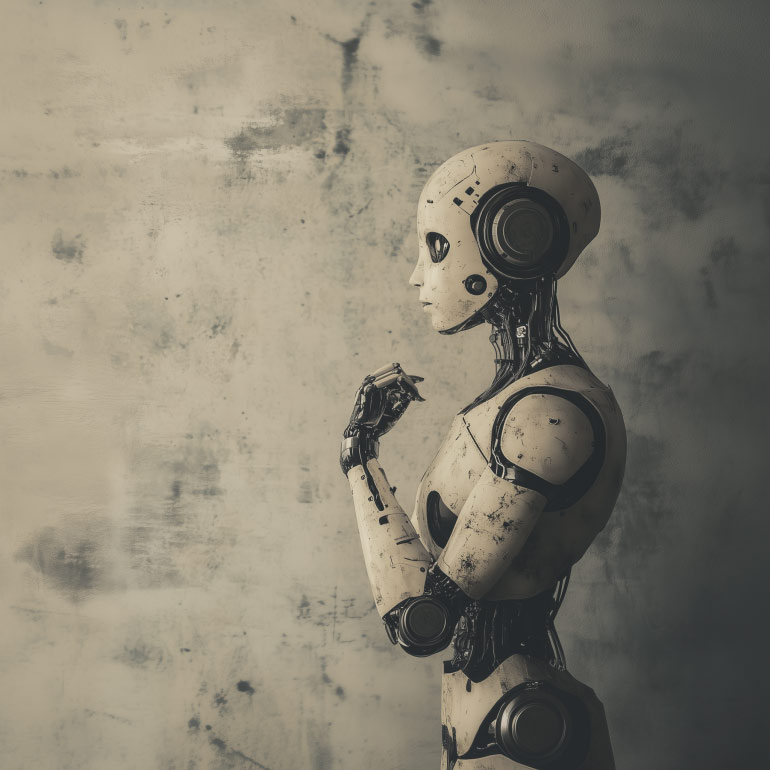
That’s where AI steps in, not as a gimmick, but as the operating system for space activity.
We’re already seeing it on Earth and in orbit:
- Autonomous navigation choosing paths without human input
- Reinforcement learning helping robots stabilise mid-air in microgravity
- AI systems analysing terrain and identifying high-value material zones
In short, AI turns a spacecraft from a remote-controlled tool into an independent worker.
From what I’m seeing across client work and AI workshops, the shift from assistive tools to fully autonomous systems is already underway.
Without it, none of this scales. With it, the whole thing becomes viable.
Starship: The Muscles Behind the Mission
Even with smart robots, you still need to move a lot of mass.
That’s where SpaceX’s Starship changes the game. Fully reusable, massive payload capacity, and crucially, the ability to refuel in orbit.
That last point is the real unlock.
Orbital refuelling, expected to be demonstrated at scale around 2026, effectively removes the range limit. Suddenly, deep-space missions aren’t one-shot gambles. They become repeatable logistics operations.
Think less Apollo. More supply chain.
The Hard Bit: Landing on Something That Barely Has Gravity
Landing on 16 Psyche isn’t like landing on Earth, or even the Moon.
There’s almost no gravity. Push too hard and you bounce off into space.
Engineers are exploring some inventive solutions:
- Harpoon-style anchors that fire into the surface
- Claw systems inspired by insects
- Foam stabilisation to bind loose material
- Electrostatic adhesion for additional grip
The key insight is simple. Mobility and anchoring can’t be separate systems. They have to work together, or the physics doesn’t cooperate.
Getting the Goods Back: From Theory to Reality
Even if you can mine an asteroid, you still need to get the materials home safely.
This is where companies like Varda come in.
They’ve already proven that you can manufacture in space and return materials to Earth using compact re-entry capsules. It’s early, but the principle works.
Translate that from pharmaceuticals to metals, and you have the beginnings of a full loop:
Launch → Extract → Process → Return
That’s not theory anymore. It’s architecture.
What Happens to Gold When It’s No Longer Rare?
This is where things get interesting.
If even a modest amount of asteroid gold reaches Earth, prices won’t just dip. They’ll collapse.
History gives us a useful precedent. Aluminium used to be more valuable than gold. Then industrial production made it cheap, and suddenly it was everywhere.
Gold could follow the same path.
We’re already seeing a version of this in software. Coding used to be expensive, specialist work. Now AI can build functional applications in a fraction of the time, and costs have dropped accordingly. When supply increases and barriers fall, price and perceived value follow.
Instead of being locked in vaults or worn as jewellery, gold becomes a practical material:
- Corrosion-free wiring
- High-performance electronics
- Advanced industrial applications
That’s not a loss of value. It’s a shift in how value is defined.
The Bigger Shift: From Scarcity to Utility
The real impact of 16 Psyche isn’t about making a few people unimaginably wealthy.
It’s about removing constraints.
When materials become abundant, innovation speeds up. Entire industries change shape. New ones appear.
- Platinum could accelerate hydrogen technologies
- Nickel could transform large-scale energy storage
- Iron could enable massive space-based infrastructure
In other words, the bottlenecks move. And when bottlenecks move, economies follow.
Risks, Reality Checks, and a Bit of Perspective
It’s easy to get carried away with the upside. In practice, these transitions are messy.
Let’s not pretend this is all smooth sailing.
There are real challenges:
- Harsh space environments that break equipment
- Communication delays and system failures
- The need for safe, reliable autonomous AI
And then there’s the ethical layer. How do we manage space resources responsibly? Who owns what? What does regulation look like when the “land” isn’t on Earth?
None of this is trivial.
But it’s also not a reason to ignore what’s coming.
So What Does This Mean for Business Today?
This isn’t just a space story. It’s a signal.
We’re entering a phase where:
- AI moves from assisting work to doing work
- Physical and digital systems merge
- Resource constraints begin to loosen in unexpected ways
If your business depends on materials, supply chains, or manufacturing, this matters more than you might think.
Not tomorrow. But sooner than feels comfortable.
Where This Shows Up Sooner Than You Think
If you’re reading this thinking, “Interesting, but a bit out there,” you’re not alone.
The trick is recognising the pattern early. You don’t need to be mining asteroids to feel the impact.
Here are a few places this convergence is already starting to show up:
- Supply chain strategy: AI-led optimisation and alternative sourcing models are already reducing dependency on traditional materials
- Manufacturing and robotics: Autonomous systems are moving from assisted to fully independent decision-making
- Energy transition: Materials like platinum and nickel are critical to hydrogen and battery innovation
- High-value asset markets: Anything built on scarcity (gold included) becomes vulnerable when supply assumptions change
- AI in physical environments: From warehouses to construction sites, the same “physical AI” used in space is being deployed on Earth
You don’t need a rocket to feel the shift. You just need to notice where AI is starting to replace human decision loops in the physical world.
Final Thought
When the first meaningful batch of asteroid-derived material lands back on Earth, it won’t just be a technical achievement.
It will be a psychological one.
A quiet but very real shift from a world defined by limits to one where those limits start to look negotiable.
And once that idea takes hold, everything else tends to follow.
From a marketing and technology perspective, this is less about space and more about how quickly “impossible” becomes “normal”.