AI in MRI: Clever, Capable… but Conditional
Deep learning has arrived at the MRI party in a lab coat and smart shoes, promising to revolutionise how radiologists work. And to be fair, it’s already making a splash: automating image segmentation, speeding up analysis, and occasionally showing up human specialists in diagnostic precision. But before you throw out the stethoscope and let Skynet take the night shift, here’s a sobering truth: AI isn’t always the answer. In fact, sometimes it’s a bit of a liability.
This isn’t about bashing tech. Quite the opposite. AI, particularly convolutional neural networks (CNNs), has shown it can tackle big jobs across a range of conditions: brain tumours, MS, neurodegenerative diseases, even dodgy knees. But recent evidence from institutions like Harvard Medical School suggests we need to rethink AI’s role in medicine. Instead of “AI will save us all”, think: “AI makes a pretty decent assistant, if you keep an eye on it.”
Why Deep Learning Rocks MRI (Sometimes)
Gone are the days of painstaking manual feature extraction. Deep learning can process MRI scans from end to end, automating complex tasks like tumour segmentation and prognosis prediction. For volumetric data, 3D models (like SFCN and DenseNet) handle multiple slices at once, learning subtle structures even experts may miss.
What’s fascinating is that, in some tasks, simpler models outperformed fancy Transformers. A lesson for anyone who thinks bigger always means better: in medicine, generalisability beats bragging rights every time.
Then there’s image quality. AI doesn’t just interpret images — it can improve them. Deep learning techniques sharpen blurry scans, reduce noise, and make acquisition faster, which means happier patients, fewer repeats, and less eye strain for radiologists.
From Brain to Bone: The Diagnostic Frontier
Neuroimaging leads the way. AI helps classify Alzheimer’s, track MS lesions, and segment brain structures with mind-bending precision. FDA-cleared tools like AI-Rad Companion now automatically measure brain volumes and spot red flags for neurodegenerative diseases.
In oncology, AI supports prostate cancer diagnosis by identifying biopsy targets with surgical precision. And in musculoskeletal imaging, it’s already outperforming humans in detecting ligament tears. That’s not hype. It’s peer-reviewed, statistically significant performance.
The Harvard Reality Check
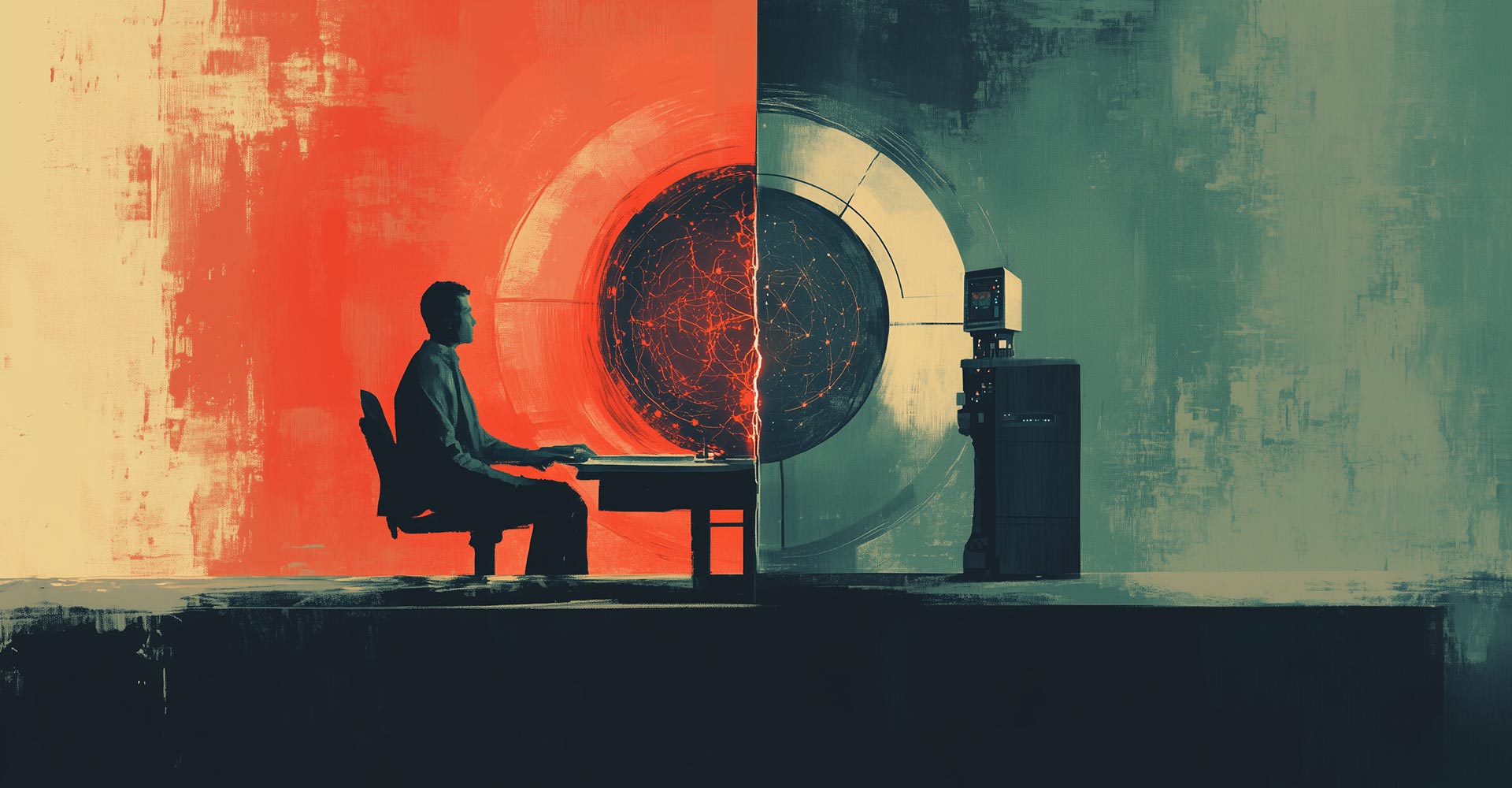
AI isn’t just a tool; it’s a collaboration. And not all collaborations are helpful. Harvard studies found that when AI is good, it lifts human performance. But when it’s bad? It actively drags clinicians down.
Worse still, some AI tools are black boxes. They make decisions, but no one’s quite sure how. That’s where explainable AI (XAI) comes in. Systems like “Dr CaBot” narrate their reasoning like a seasoned diagnostician, giving doctors a way to trust (and verify) what the algorithm is up to.
Not Always the Case: Failures, Bias, and Other Fun Surprises
One major problem? Generalisability. An AI model trained on a Siemens scanner might fall apart when fed images from a Philips one. That’s a real issue, not a technicality.
Bias is the next elephant in the scan room. If training data skews white, young, and middle-class, AI will perform worse on everyone else. In one unsettling study, AI systems could infer a patient’s race from medical images alone. That’s as fascinating as it is terrifying. And it puts health equity at serious risk.
Trust Isn’t Given. It’s Engineered.
To make AI clinically viable, trust needs to be built — and earned. That means rigorous validation, not just on clean datasets, but in real-world, messy, multi-site clinical environments.
It means explainability, so doctors aren’t blindly following a digital hunch. It means fairness engineering to stop bias before it starts. And it means clear policies on who’s liable when AI gets it wrong (because it will).
Conclusion: Augmentation, Not Automation
Let’s be clear: AI isn’t replacing radiologists yet. It’s already saving them a lot of time, spotting things they may miss, and cutting down repeat scans. That alone is transformative.
But given the pace of AI advancement, it’s not unrealistic to think that, in time, certain diagnostic tasks could be handled more reliably by machines than by humans. The real question isn’t whether AI will become better — it’s how we’ll govern, trust, and collaborate with it when it does.
So yes, bring AI into the room. Just make sure it’s there as a partner, not the boss.