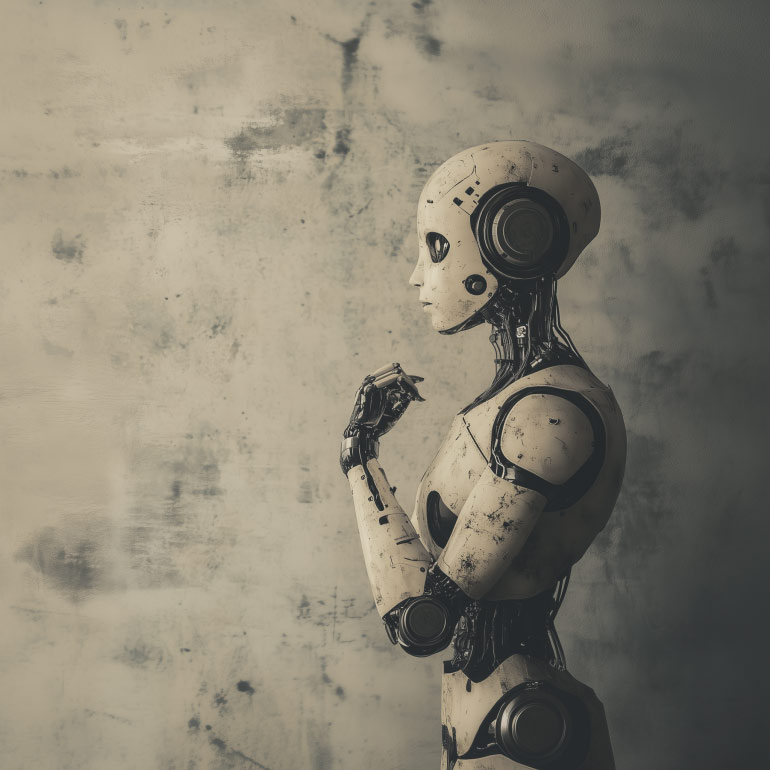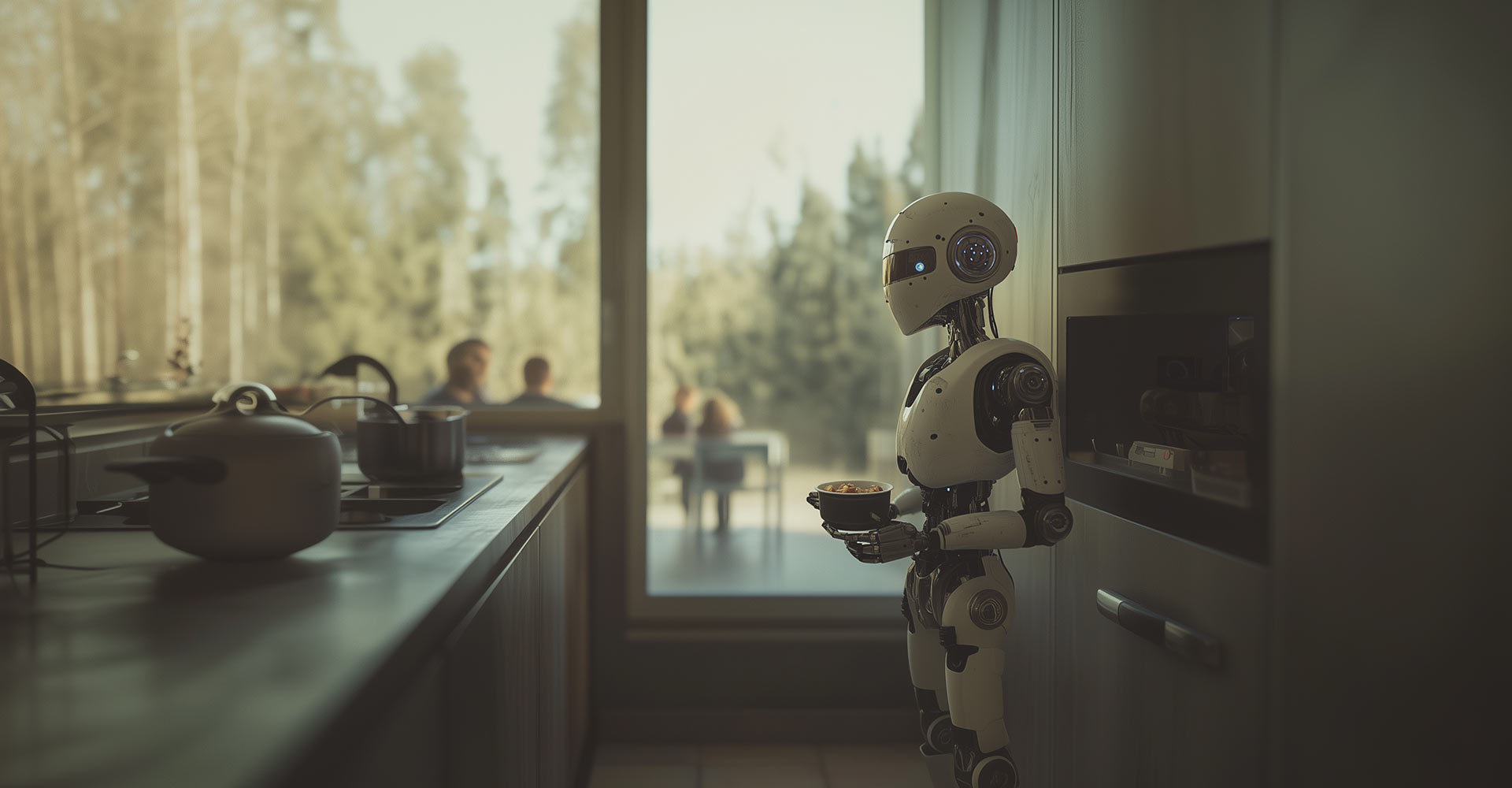
The robot revolution isn’t coming. It’s already here, and it’s rolling straight into your kitchen. Last week, X1 Technologies opened pre-orders for Neo – the first general-purpose home robot – for around $20,000 or $499 a month. It cleans, cooks, teaches, tidies, and, if the marketing’s to be believed, might even remember your anniversary (something a few humans could learn from). For less than a family car lease, you can now have a tireless live-in assistant who never calls in sick, never takes holidays, and doesn’t talk back. That, my friends, changes everything.
If Neo works as advertised, this isn’t a gadget. It’s a tipping point – the iPhone moment for robotics. The future isn’t creeping up on us anymore; it’s walked through the front door and offered to make tea. After a fair amount of research, it’s clear just how dramatic this could be, I reviewed 2 papers. One predicts that by 2040, robots will have automated up to 90% of service jobs, from domestic cleaning to hospitality. The other describes it as an economic black swan: a total, instant upheaval of the service economy. In other words, we’re not just talking about clever vacuums – we’re talking about the end of labour as we know it.
The $499 Robot Paradox
Here’s where things get properly mind-bending. A robot that costs less than a cleaner’s monthly wage could handle every household chore, every back-of-house restaurant task, and even basic care work. It’s a productivity miracle – and a potential employment disaster. Imagine every café, hotel, and household suddenly replacing five human workers with one sleek, untiring machine. The economics are irresistible. The social fallout? Less so.
Economists call this the Automation Paradox: technology that makes goods and services incredibly cheap, but in doing so eliminates the incomes that allow people to buy them. Picture it – a world where your laundry, garden, and dinner are handled flawlessly by machines, but no one can afford to pay the electricity bill. Progress, meet irony.
Neo-Feudalism or Robot Renaissance?
If ownership stays concentrated in a few corporate hands, we’re heading for what some analysts are already calling neo-feudalism – a society divided between robot-owning elites and everyone else. Those who control the fleets of robot workers will collect the profits, while the rest watch Netflix in spotless homes, living off dwindling welfare payments. Plenty of free time, no income – and probably very clean windows.
But it doesn’t have to be that way. Economists and futurists are rallying behind the idea of a Citizens’ Wealth Fund – a sort of national robot portfolio. Every citizen would own a share of the automated economy, earning dividends as the robots work. It’s not welfare; it’s ownership. Pair that with a Universal Basic Income (UBI) or Universal Basic Services (UBS) – where essentials like food, housing, and transport are provided at low or no cost – and you’ve got a blueprint for a stable, fair post-labour society. In short, if the robots are doing the work, we should all get a cut.
Work, Rewritten
If we get this transition right, we won’t just rescue the economy – we’ll reinvent it. Freed from the grind of repetitive jobs, humans could finally focus on what psychologists call serious leisure – purposeful pursuits like creativity, lifelong learning, community projects, and the arts. Imagine a society where “What do you do?” no longer means “How do you earn money?” but “What are you passionate about?” Work could evolve from survival to self-expression.
Of course, that’s the optimistic version. The pessimistic one involves millions of unemployed people wondering what to do with endless free time while watching AI influencers explain how to be “your best self.” Getting from here to there will take political will, visionary policy, and a complete rethinking of how we define value. Productivity will no longer be measured in output per worker, but in quality of life per citizen.
The Future Starts in Your Living Room
It’s tempting to dismiss all this as science fiction, but Neo’s pre-orders suggest otherwise. The domestic robot age has officially begun. Within a decade, a household robot could be as common as a smartphone – and just as transformative. The way we build homes, design cities, and structure daily life will shift around them. Kitchens might be optimised for robot chefs; care homes might have more machines than nurses. Even relationships with work and time will change once most physical and mental labour can be automated.
So, will the rise of affordable robots deliver a golden age of abundance, or an economy that collapses under its own brilliance? The question isn’t if robots will take our jobs – that’s a given. The question is who owns the robots and who benefits when they do. Our collective choices now – around taxation, ownership, and education – will determine whether this becomes the dawn of shared prosperity or the digital dark ages.
The first home robot revolution has already begun. Let’s just hope we programme it with a little humanity.